Tuesday, October 07, 2008

First Frost and Fall Hive Inspection

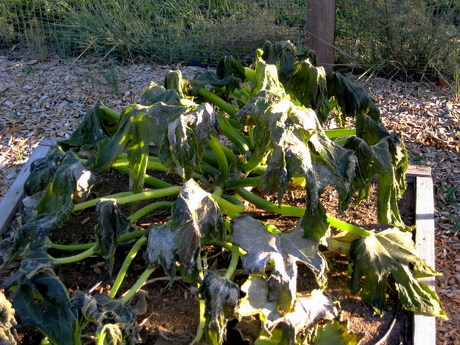
Well the Indian summer is over and we had our first frost last night. Here is how the Squash plants looked today:


Now begins the preparations for winter. I inspected both beehives and found that they were in good shape and had stored plenty of honey away for the winter season.

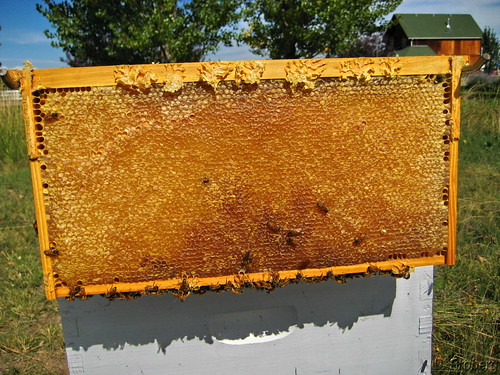
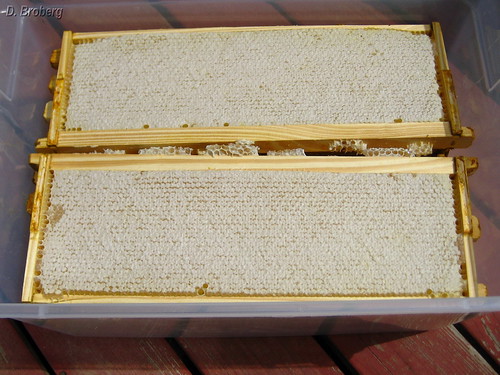
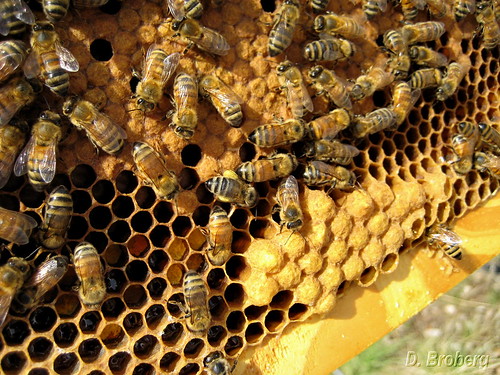
This is an example of how the top 10 frames from hive #1 are looking. This is all capped honey and is quite heavy. This will sustain the bees through the winter.


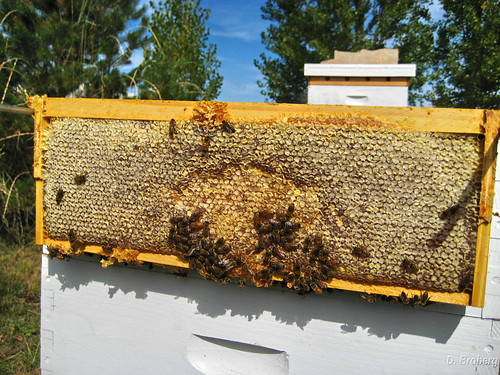
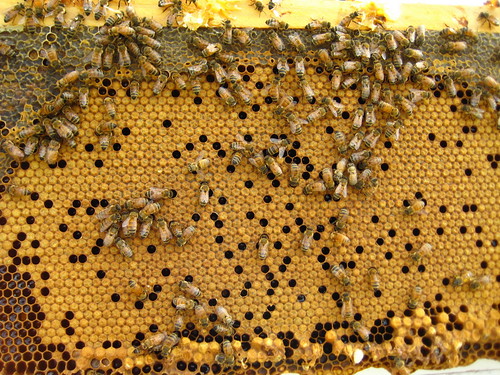
The frame above is from hive #2 and shows an area in the center that was previously occupied by brood and has been recently been refilled with capped honey for winter. This hive has more than a dozen frames like this in good shape.

This will be the first fall that we have decided not to feed our bees any sugar water. We have left them to gather their own honey to store for winter which must be much healthier for them anyway. If they run out, we have some reserves of their honey from previous harvest we can feed back to them.

Sunday, October 05, 2008

Fall Colors in our Garden

Well fall is here and the leaves are changing, but we haven't had our first frost yet. This is unusual for our location and it means we get to enjoy a second burst from our garden. The mild weather has given the garden a new burst of color and blooms that makes this a great time of year. Today was a bright overcast day, which made it perfect for snapping a few pictures. I thought I'd put some here to share the color we are enjoying. All of these were taken in our own garden today. Click to see full size.


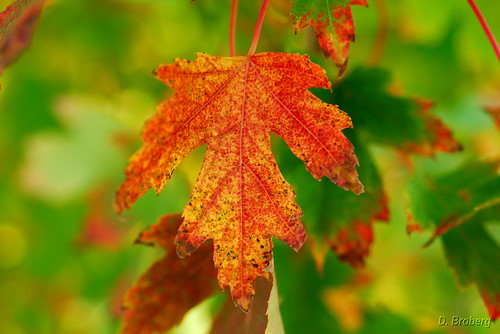
Maple leaves from our one and only maple tree.

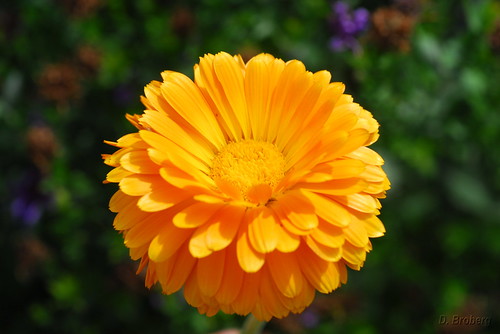
Yellow Flowers


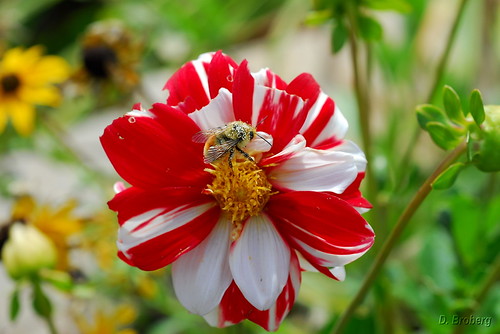
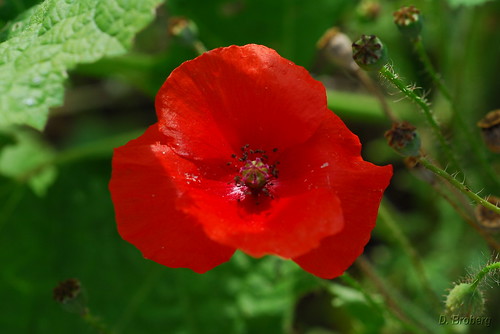
Red & White Dahlia and a Red Poppy


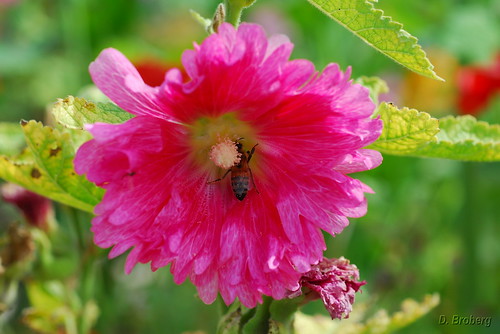
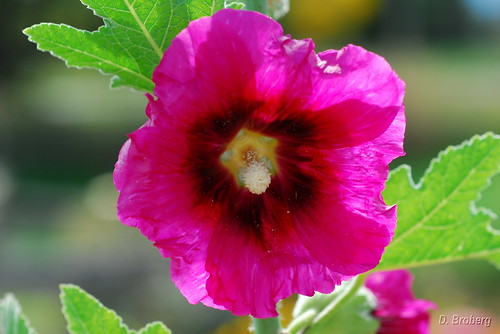
Pink Holly Hocks


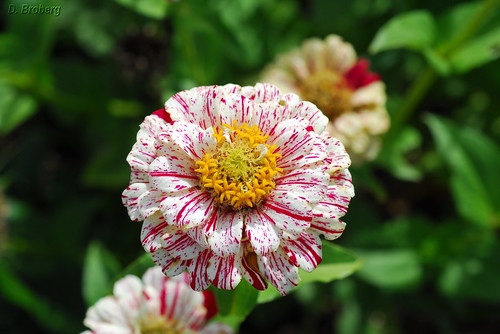
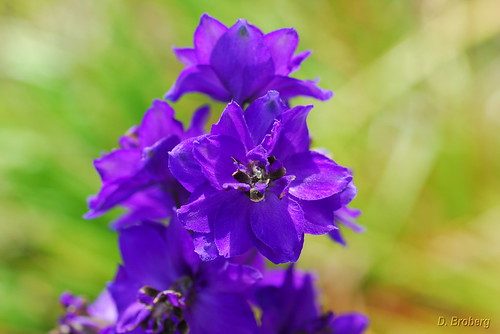
Bicolor Zinnia and Blue Delphiniums


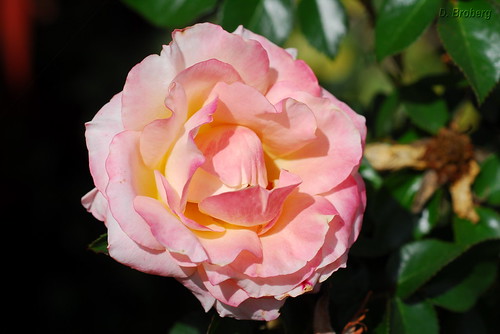
Pink-Yellow Rose

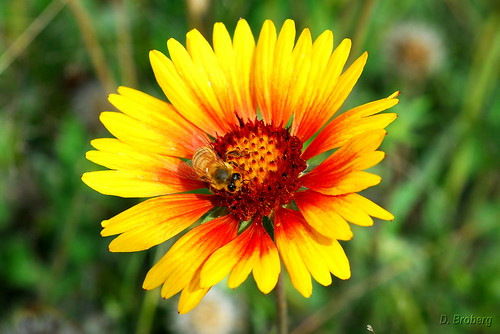
As you can see from the pictures that even though the asters, russian sage and spirea have all faded, the bees are still finding plenty to feast from in our gardens.

Thursday, October 02, 2008

Giant bee from Japan

I was in Japan recently and while walking around the Japanese Gardens at Makuhari Seaside Park I saw this giant bee on a flower. I've heard of the giant Japanese hornets, but this one didn't look like a typical hornet and with all the hair it seemed more like a very big honey bee. Can anyone identify it?

(Click the image for an even larger view.)

Saturday, September 27, 2008

Making Whipped (spun) Honey

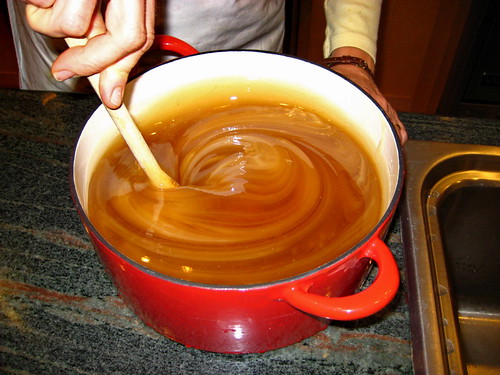
We took some of the surplus honey and decided to experiment with some whipped or creamed honey this year. Depending on where you are from, different names are used for this type of processed honey product. Some call it creamed honey, others call it whipped honey and some call it spun honey. It's all the same thing and it has no cream, is not whipped nor spun. It is 100% honey with nothing added and nothing taken away, but it has been processed to optimize the crystallization process by a heating and cooling process. To start the crystal process, a "seed-honey" is used much like using a sour-dough seed to start a sour-dough bread recipe. The seed-honey is already creamed and has the needed crystal structure which spreads throughout the honey when mixed.

The photo below shows the seed honey being combined with the batch of heat-treated honey that has cooled back to about 80F.


When it is done right, you end up with a creamy-light colored honey that has the consistency of peanut-butter. It should stick to a knife without dripping, yet liquefies quickly on your tongue or on warm toast or muffins - Yummy!

The process also requires a week or more stored at just the right cool but not cold temperature. We'll have to wait a few weeks to know if ours came out just right.

Thursday, September 18, 2008

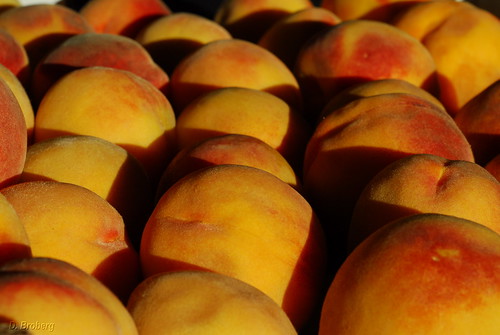
Honey for Peaches!

We traded some of our Golden Harvest for another kind of golden harvest: Fresh Utah Peaches!

Sunday, September 14, 2008

Another Honey Harvest: 9/13/08

We recovered the last frames of surplus honey from the hives yesterday. When we harvested the six medium supers on Labor day, we sorted out all that were less than 100% capped and put them back on the hives. It amounted to about 1 super on each hive or about 10 frames each. Since it is getting late in the season, we gave them just 2-weeks to finish capping them, which really wasn't enough but we're out of time now and what they pack and cap from now on must be for their winter stores.

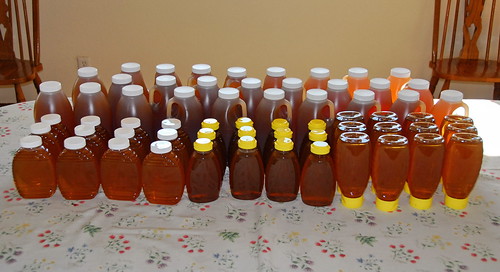
From the 20 frames we took there was only about 10 that were completely capped now and the rest we'll just freeze and give back to them in the spring. We've been too busy to process the honey and bottle it, so we don't know what the final total will be, but up until now we have already bottled 279 pounds. It will be close, but we might even break 300 once it is all processed. We're both amazed at the bounty this year.

The photo below shows just a portion of the 156 lbs from Labor Day:


UPDATE (9/27/08): We have totaled all the honey harvests from this season: 312 lbs!

Wednesday, September 03, 2008

Robbing the Bees (video)

I made a time-lapse video of our harvesting process: "Robbing the Bees"

Sunday, August 10, 2008

The best honey around, really!


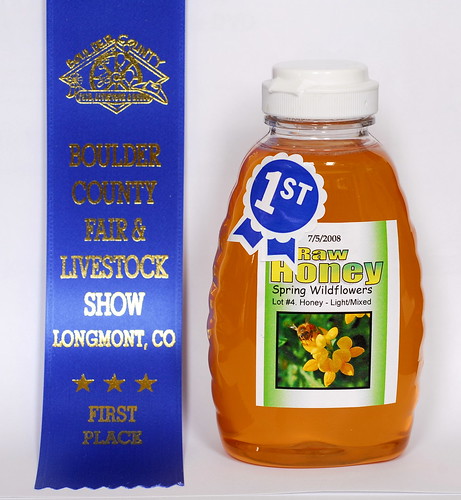
We entered this bottle of honey from our first harvest this season in the local county fair and won first prize!

Thursday, August 07, 2008

Tomato Season in Full Swing

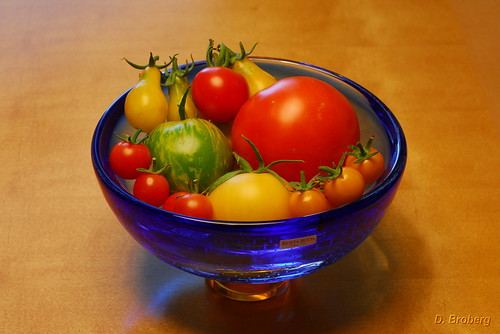
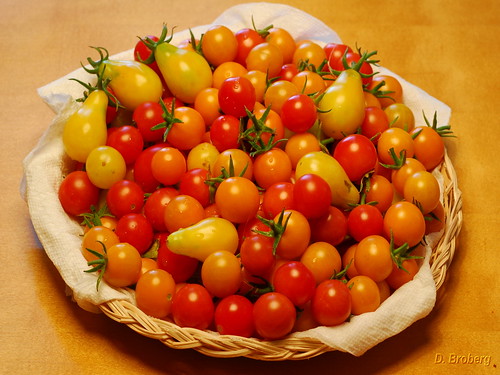
August is here and the tomatoes are coming on in full glory. Here are a few snapshots showing todays harvest:


Click either picture to see the notes in Flickr that identify the varieties.


Yum, yum!

Sunday, August 03, 2008

Death in the Russian Sage

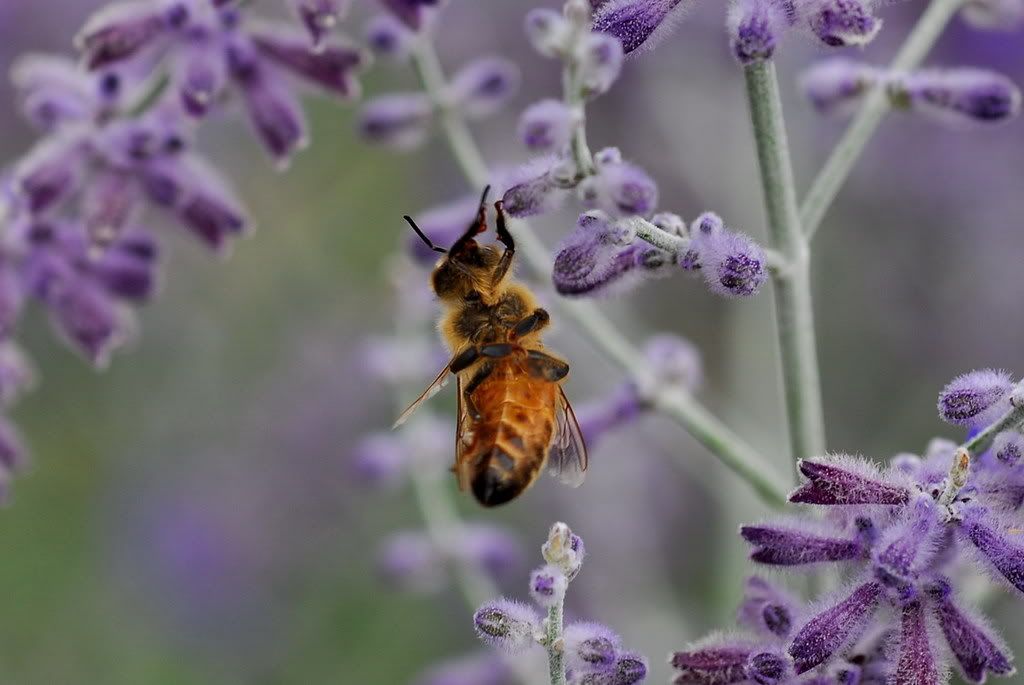
This time of year, a popular landscape plant called Russian Sage (Perovskia atriplicifolia) is a favorite for the local bees.


Yesterday evening I went out to watch the bees foraging on this plant. There were hundreds bobbing in and out and going from flower to flower gathering nectar for my fall honey. I like to see them working hard, but there was something wrong among the flowers. I saw several bees that seemed to be motionless or just hanging by the flowers apparently victims of some tragedy.


This death in the Russian sage was troubling. I saw maybe a dozen dead bees spread over 4 large plants. I shook a few to see if they were alive and one flew away, while the other fell to the ground. I posted questions about this mystery with photos over on the Beemaster.com beekeepers forum and got a quick reply; mystery solved.

What I wasn't seeing at first, was a very small predatory bug called an "assassin bug" or an "ambush bug". According to Wikipedia, these bugs capture their prey with sticky feet and inject a paralyzing saliva into their bodies then ingest them by literally sucking the life out of their bodies. While this seems gruesome, there are many hazards waiting or the foraging bees and the number taken by these bugs is far less than what would happen if insecticides were used on the flowers.

After getting the answer from BeeMaster.com, I went out for another look, to find the bugs. Here are a few more close-ups showing these nasty bugs in action:


This one shows a native bee (species unknown) also falling victim to the ambush bug, which can be seen directly above:

Thursday, July 31, 2008

Hottest July on Record?

We got this from the National Weather Service today:
THU JUL 31 2008 ...Heat advisory in effect from 1 pm to 9 pm MDT Friday... The national weather service in Denver has issued a heat advisory...which is in effect from 1 pm to 9 pm MDT Friday. Temperatures across the plains Friday are expected to be in the low and mid 90s by early afternoon. Readings are then expected to peak between 100 and 105 degrees in the mid afternoon. The mercury will probably remain above the 90 degree level until mid-evening. A heat advisory means that a period of hot temperatures is expected. Sunny skies...hot temperatures and low relative humidities will combine to create a situation in which heat illnesses are possible. Drink plenty of fluids...stay in an air-conditioned room...stay out of the sun...and check up on relatives and neighbors.

How hot was it? According to some reports, it was the hottest July on record, possibly the hottest summer ever:
On Wednesday, we tied a 134-year record for consecutive days in the 90s, with 18. Today, number 19, enters the history books as the new sweatiest summer run... You can call the temperatures pleasant or oppressive, but this streak is unquestionably historic. It ties a record set in July 1874 and the same month in 1901.
Well, I suppose it depends on how you measure. How many days did we have over 100 degrees?
  • We had none at my house, and only a single 100 degree reading in Denver.)
How many new record high temps were set?
  • None officially, not a single new high temperature record for July.
So how do recent years compare? Well let's not be too quick to forget that sweltering July we had just back in 2005. Remember we had 25 days 90 or above and 7 days over 100 and we set 8 new high temp records for the month. July 2005 also had a higher average temperature for the month. See data here.

So what's the big deal? Nothing really, but it seems the news media wants to make a story anywhere they can. If it is something they can tie to that ever popular topic of "global warming" they will. My advice is before you get too excited, verify the data yourself.

Saturday, July 26, 2008

Another Honey Harvest!

For the second time this month, we found that we needed to harvest honey. Those bees have been busy bees. We took the first honey super (placed in May) from the Minnesota bees, which was now fully capped. We also took the oldest honey super from the Italians. That brings the tally up to 3 harvested supers for the Italians and one for the Minnesotans.

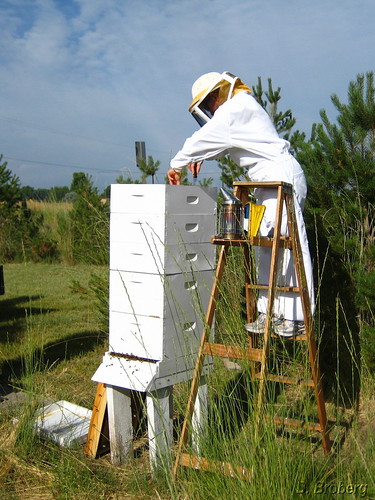
This is Becky from her vantage point high up on the ladder getting ready to harvest from the Minnesota Hygienic bees.


Here are some of the frames of capped honey we took today.

Freshly bottled honey
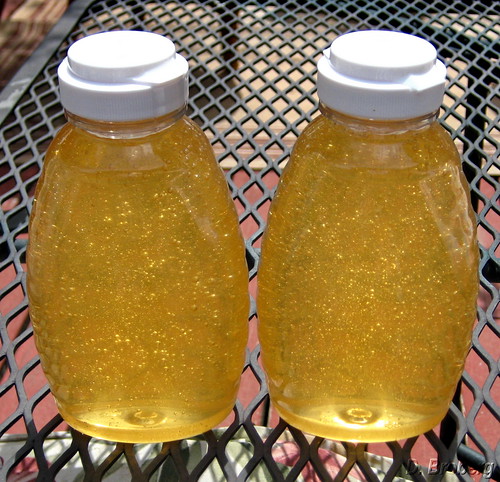
And here are just two jars of the 60 lbs of freshly bottled honey we processed today.

Friday, July 25, 2008

Midsummer Climate Update:

It has been a very dry summer so far. According to the national weather service, Denver has officially received only 3.26” inches of total precipitation since January 1st while the average for this time of year should be 9.76”. That’s only 1/3 of normal rainfall! At our weather station, we have gone for 37 days with no measurable rain and 50 days since we had more than 1/100th of an inch. Our total precipitation since Jan 1st is only 4.16”, which is a bit ahead of the airport, but still way behind! Everything is very dry and the garden and lawn have been suffering.

It has also been hot, but thankfully not as hot as Denver. The official highs for Denver, (recorded at DIA) have logged twelve consecutive days over 90º F, which is not yet close to the record of eighteen days. At our weather station, we have had fifteen days over 90º in July, but no consecutive stretch longer than five days. Hoping to match the trend from last year, so far we have not had any days that reached 100º, our highest recorded temperature so far this summer was 99.0º on July 20th. Our growing season began about normal, with our last freeze recorded on May 11th this year, three days later than last year.

What does this mean for the garden? Well we have been spending a lot on water to keep everything irrigated, but no matter how much water you put, it never seems to do as much good as natural rain. The tomatoes and peppers seem to be enjoying the heat as we’d expect as well as the squash. For some reason the bees are having a great year so far. The trees however, seem to be suffering the most.

News story on Denver’s heat wave.

Check-out our our Garden Weather Page.

Monday, July 14, 2008

Washboarding observed

Okay, taking a closer look at the behavior with full motion, reveals something different: Sort of a dance or waggle back and forth. It is easily discerned in this video of the Minnesota Hygienics being well, hygienic. This cleaning behavior is called "washboarding". It is not well understood, but here is the video:


The Italian hive is up to the same shenanigans, but they aren't quite so organized about it:

Friday, July 11, 2008

Swedish Beekeeping


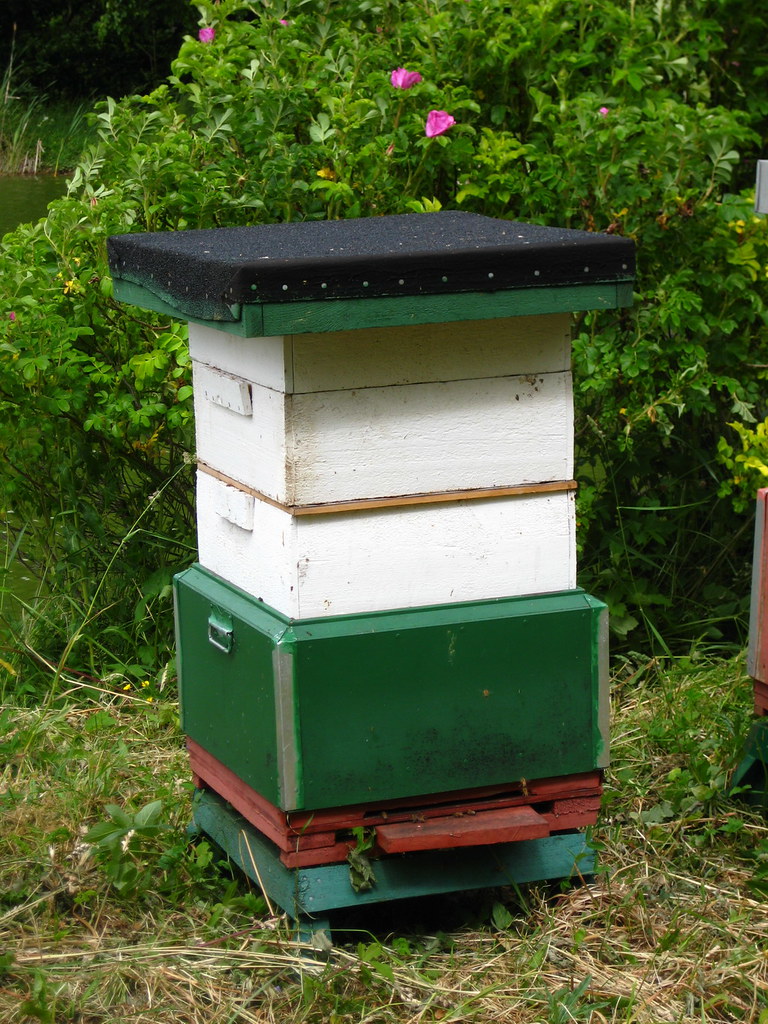
On our recent trip to Sweden, we stayed on several farms and saw some local bee yards. This one was in the Southern province of Skane near the town of Degeberga (map). I was intrigued by the different design of the boxes, compared to the common white ones we use here. Since I didn't open one up, I'm guessing that the lower brood box is insulated for the long winters. It looks like most have a queen excluder and one honey super on them now.

I had to also wonder if these came from Ikea, but I checked their on-line catalog and couldn't find them. It could be a business opportunity for them! Here is a closer view:

Thursday, July 10, 2008

Bee Bearding Observations

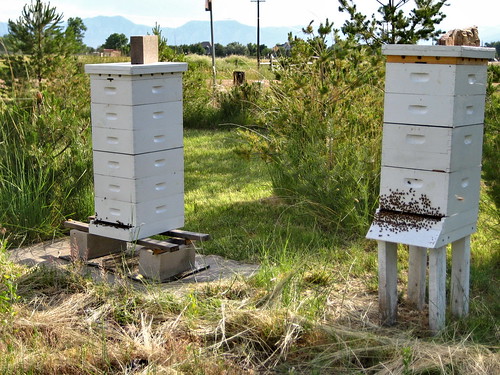
Why do honeybees sit out on the porch doing nothing? This is commonly called "bearding". This is not the kind of bee bearding that Wikipedia describes when people "wear" a swarm of bees as a beard. No, this is when they hang-out on the outside of the hive. Most sources say this is because they are hot or croweded in the hive. Take a look at the two photos below:


The top photo was taken June 25th when it was mid-70s F. The bottom one was taken July 10th when it was 99 F. What is the difference?

Both hives have the same ventilation. The hive on the right seems about the same. The hive on the left is bearding much more in the second photo. This started only after we harvested the honey last week from the live on the left. We took two full supers, left one that wasn't quite ready and added an empty one. Perhaps they are simply too crowded now? Perhaps there is some other explanation? Perhaps they are unemployed and don't have any jobs to do at the moment?

We don't know, we are only the humans trying trying to learn how to take care of these colonies. Maybe I'll add another super to the one on the left and see if that helps get them back to work.

Sunday, July 06, 2008

Surprise Honey Harvest

We got up Saturday morning to go check on the beehives. We discussed the options just in case my busy bees had filled the super we placed there just 2 weeks ago. We had only one empty super left for both hives. Sure enough, when we opened it up, we found that the top super was fully drawn and mostly filled with nectar!

With three supers already installed, I was worried that if I placed a fourth I couldn't see down in to the top one, much less would I be able to lift it off, once it was filled. There was only one thing to do, go down and see if the lower supers had enough capped frames to harvest.

To our great surprise while we were off vacationing, the bees were home working hard the whole time and we found 18-1/2 out of 19 of the frames for the first two honey supers were already capped and looking great. We realized that we didn't even have the tractor nearby to haul the weight of those supers once we took them. I hustled back to the barn and hooked up the little John Deere trailer to the tractor and came up to the honey yard ready to haul it home. Becky restocked the smoker and waited for my return.

The removal went very well, and I'd say the bees were not too upset with us considering. We ended up using the blower method (leaf blower) to remove the last of the bees clinging to the frames, which worked very well.

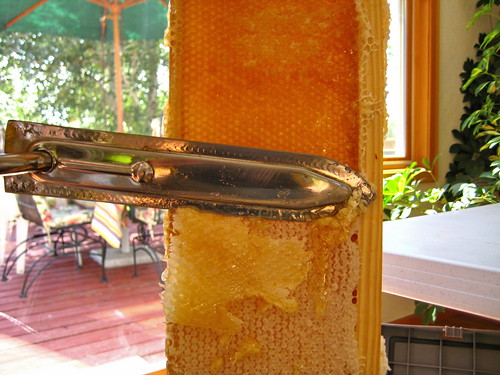
Now we had to change our Saturday plans and work on the harvest of the 18 frames we removed. Here is one of those frames as Becky worked the heated knife on the wax cappings.

It was a long day, but we got it all done, bottled and cleaned up by 5PM. In all we harvested 65 lbs from this early summer harvest. Now we are still nubees at this and this is only our third year, but let's put this outstanding spring harvest in perspective. Last year we had one harvest in September from both hives and got a total of 34 lbs (not a good year). In 2006 we had only one hive and it was our first year, and they started a bit late in the spring. We harvested once in August (27.5 lbs) and again in September for a total of 48.5 lbs.

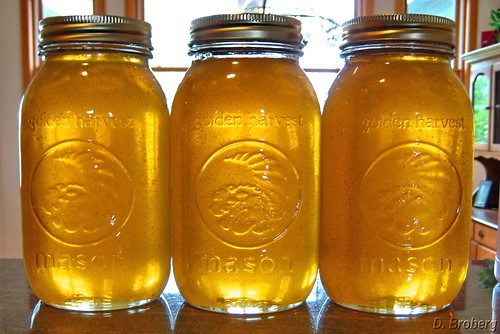
So realizing that we still have 2 months of production time left and that 2 more supers are well on their way to being filled now on each hive, we could have a very good year indeed. Here is a shot of a few bottles of this "Golden Harvest":
Friday, July 04, 2008

Naturalizing for nectar

Last year I noticed a small weed in the natural parts of the yard that the bees seemed to be fond of, so I didn't have the heart to mow over it when I was cutting the lawn. I never identified this weed but it had small yellow flowers, and I've seen it in early summer since we've moved in. Since the bees liked it, I thought I'd let it go and spread as it didn't seem to cause any harm.

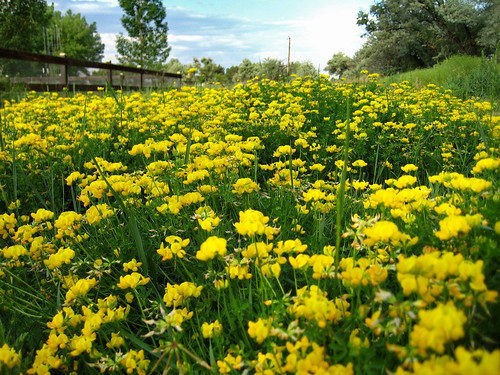
Well this year the weed is back and it has spread. Here is a shot next to the gardens in back:

The camera angle was quite low, so it makes the plant look taller. Actually it is only about a foot high. Well once again the honeybees, the bumblebees and the butterflies all seem to love the blossoms. It must be a good nectar or pollen plant for the bees, so I looked it up and found it was called Lotus Corniculatus or the common name: "Birdfoot deervetch". It's actually a pasture plant for grazing animals that is high in protein and high in nectar, which means my bees are turning it to honey!

Here is a close-up:

Sunday, June 29, 2008

June updates

We inspected both hives on June 18th and found a good brood pattern and signs of an effective queen in the new Minnesota hive.


Meanwhile the Italians seem to be working hard on a good nectar flow. Both supers were nearly full so we added a third! The shot below is some of the new honey in the upper super on that inspection:


We did another inspection June 28 and found that Italians had already made a good start filling the new super we had just added. The Minnesotans seemed to be getting lazy with the warmer weather and had started hanging out on the front porch:

Sunday, May 04, 2008

May 3 Inspection


Becky's new queen seems to be producing. We did another inspection on the new package we installed 14 days ago and saw lots of new larva and capped brood as shown in the photo above.

Progress was also going well on the other hive today, so David installed the first honey-super there.

Here is a brief movie of some of the bees returning to the hive with loads of pollen and nectar: