Saturday, May 19, 2007

Swarm Capture: May 19, 2007

We were scheduled to get our second package of bees yesterday, but no joy. The supplier called and said they had some weather delays and it didn't ship as promised. They proposed next week. This is the third delay and we're almost to the end of May.

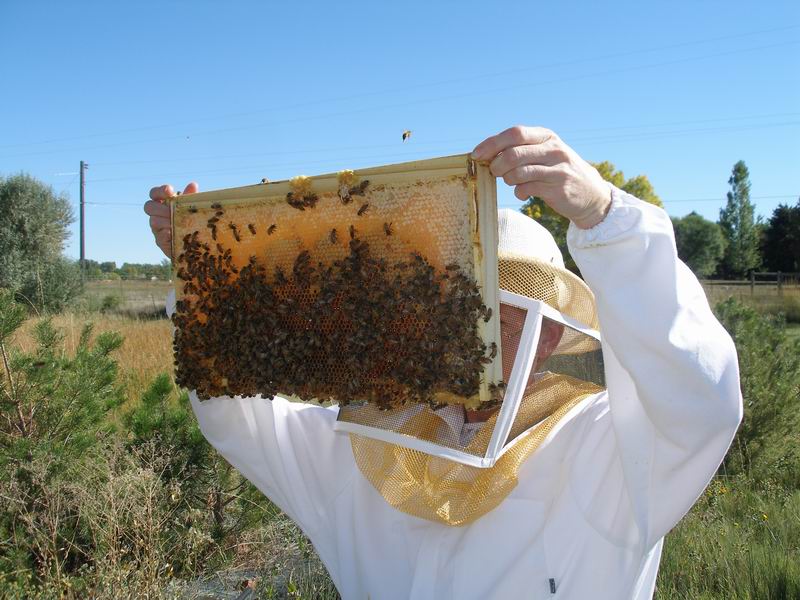
I was out getting things ready in the bee yard this afternoon and setting up the new hive-box, when I looked over and saw a huge swarm resting on a nearby pine tree. Now we don't know for sure if this swarm is a split from our hive or someone else's, but it was a big one. We changed our afternoon plans and went right to the books to see what we needed to capture it.

Anyway, here's a video showing our exciting afternoon capturing the swarm.


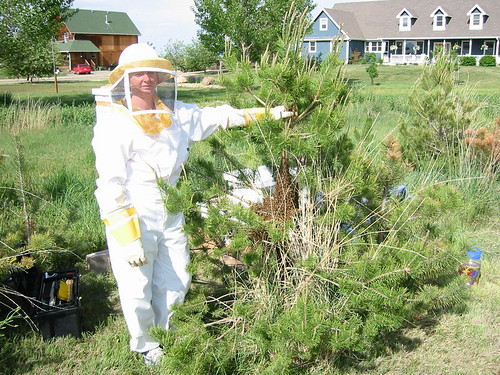
EDIT: Below is a snap-shot of the swarm on the pine-tree... It was a very nice young tree that was going to grow up and shade our hives, but we had to sacrifice it to capture the swarm.
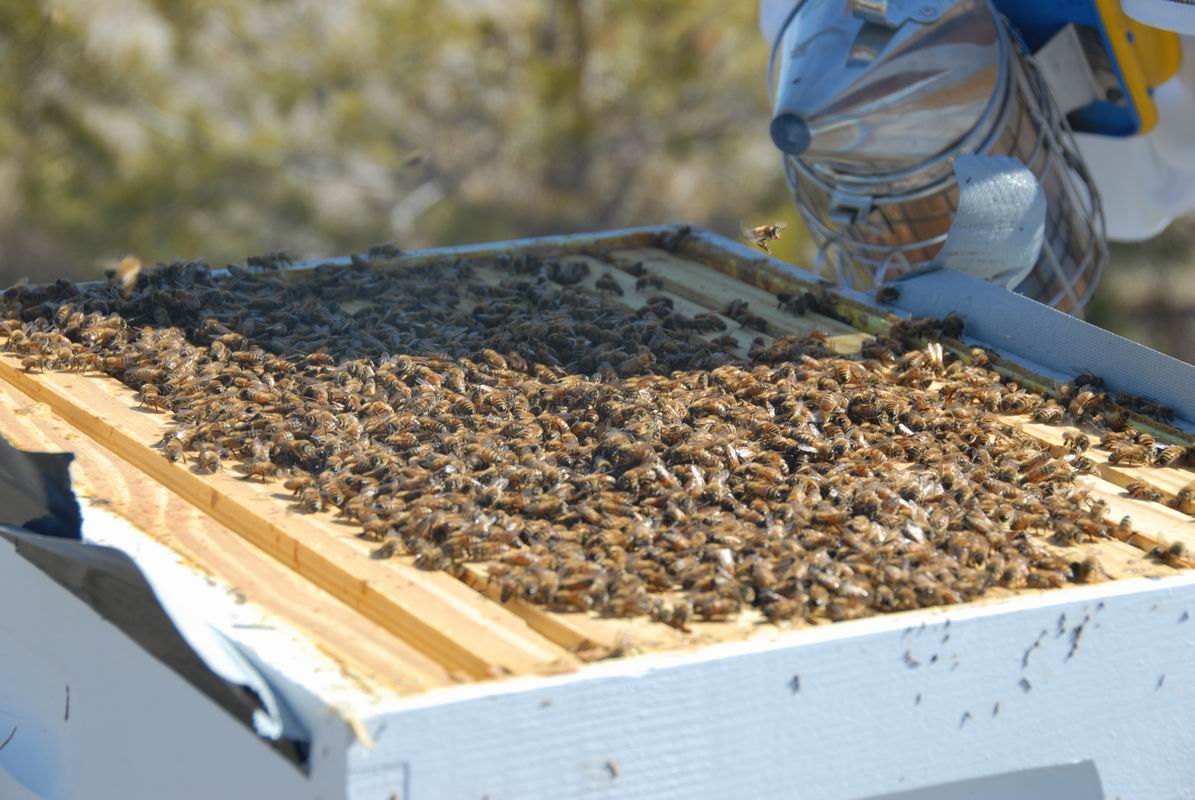
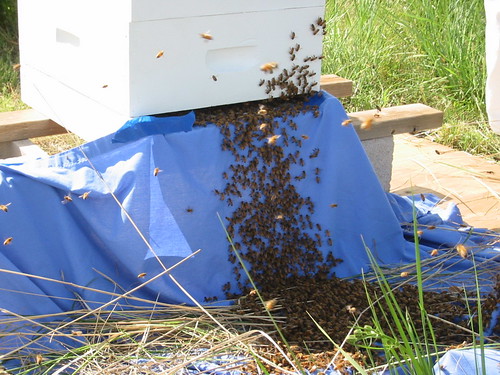
The picture below shows the swarm marching into the new hive. This was fascinating to watch. You can see a bit of it in the video.

Sunday, May 13, 2007

May Flowers


Tuesday, May 01, 2007

May Day 2007


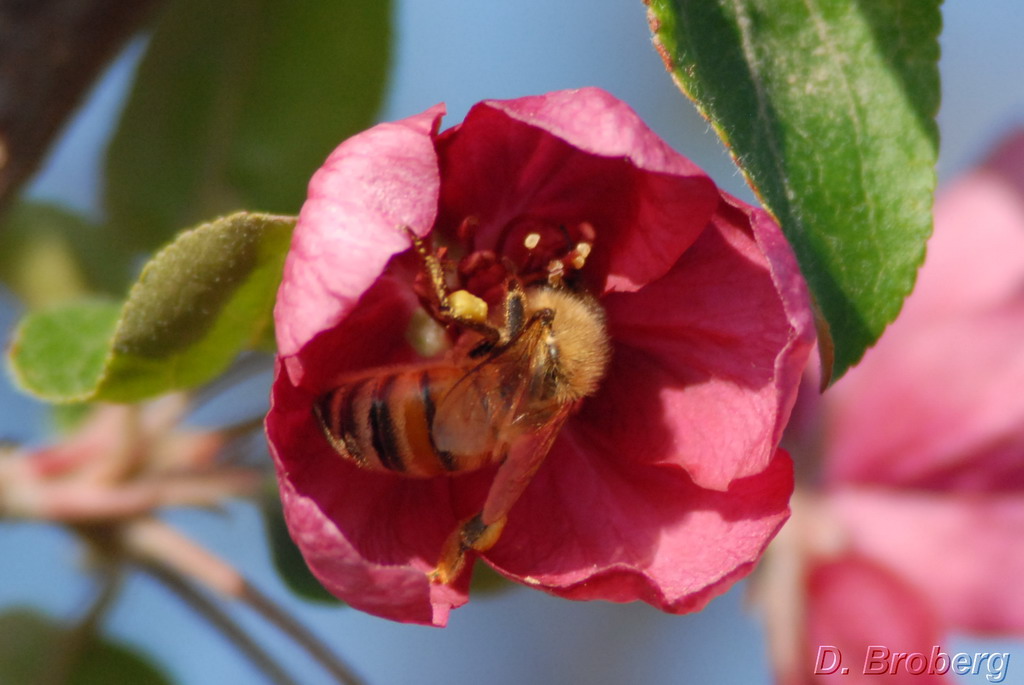
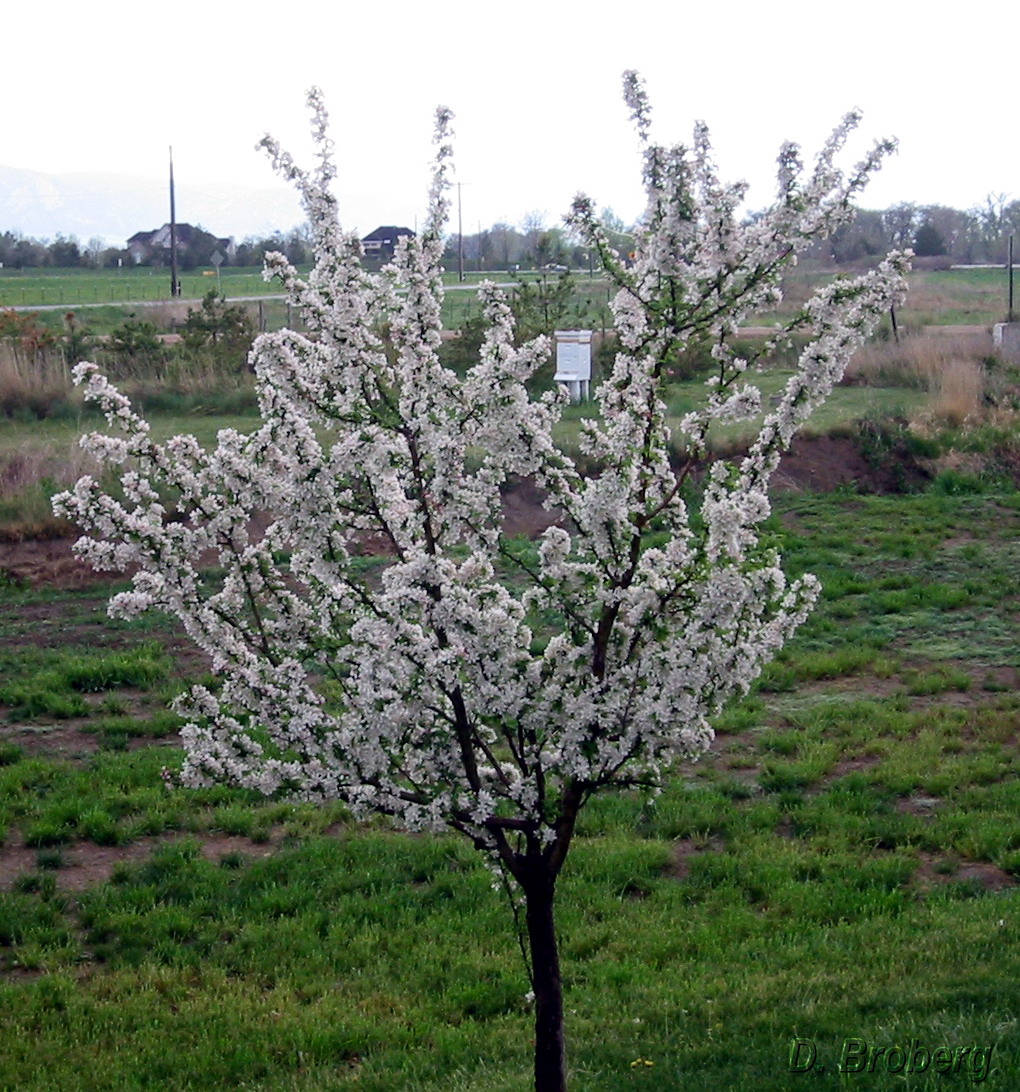
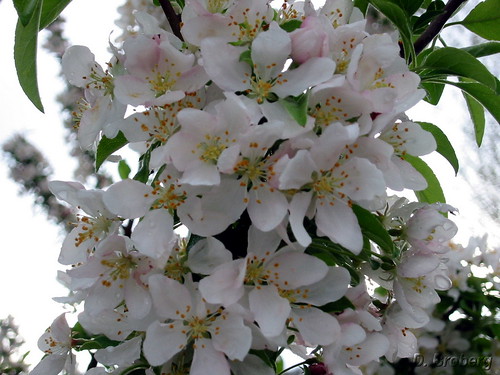
Happy May Day! Spring at our place is in full bloom. Virtually every one of our fruit trees are blooming at the same time now. We've got three varieties of crabapple trees, Granny Smith and Gala apples, cherries, plum and the choke-cherries lining the drive are all blooming this week. There are also a few flowering shrubs blooming and even the lilacs have started to bloom just this morning. I suspect the bees think they're in heaven right about now.

We've had a wet April and everything is so green too. It's quite a switch from last year. Yesterday (April 30) also marked our first harvest from the garden: 4 lbs of fresh rhubarb.

We've got about two more weeks before the new bees arrive.

Tuesday, April 24, 2007

The Drones! (April 22nd Inspection)


We've been continuing to provide syrup for the bees, at about a gallon a week. They seem to be gathering plenty of pollen, so we are not providing any pollen patties.

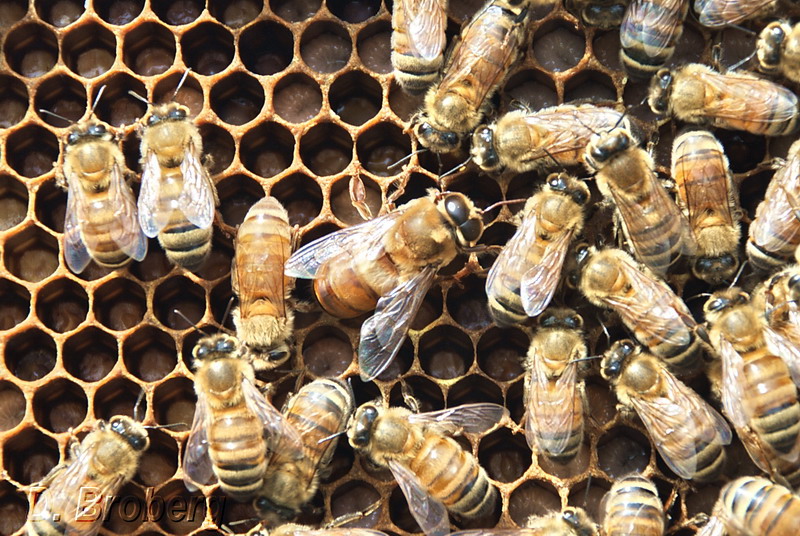
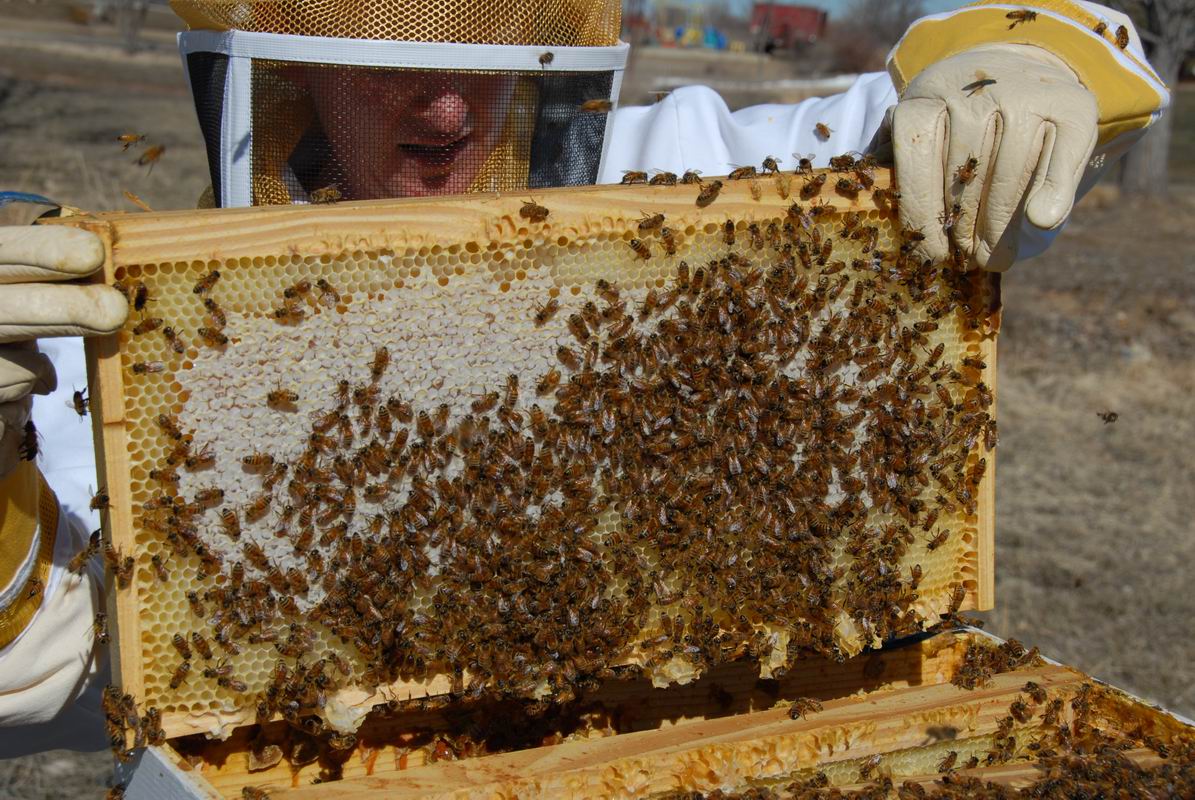
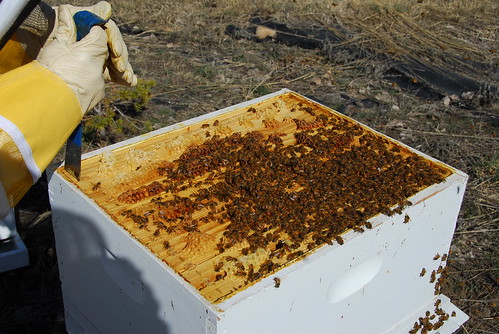
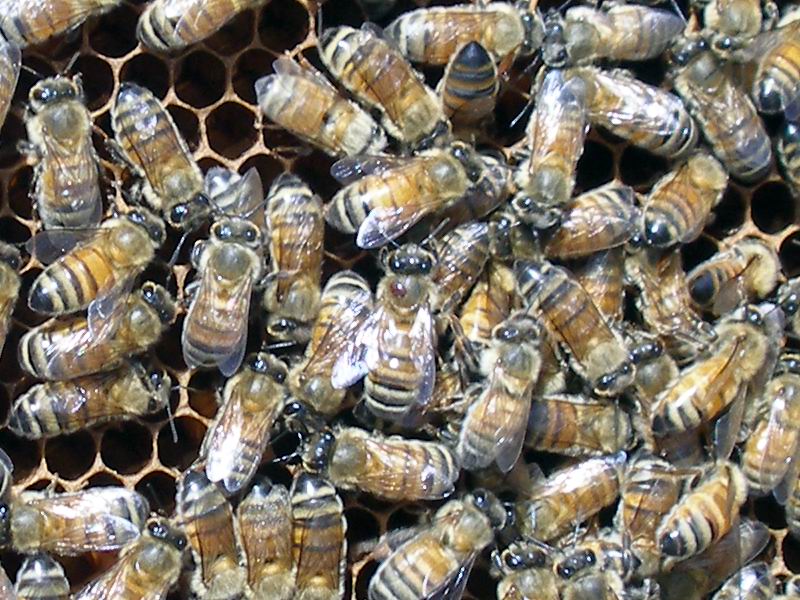
During this most recent inspection we saw plenty of drones (as shown in the picture above). There also seemed to be plenty of brood, so we did not completely open the hive looking for the queen.

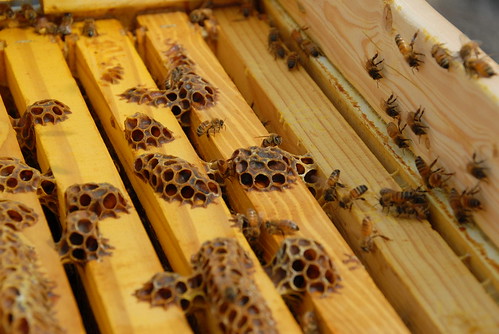
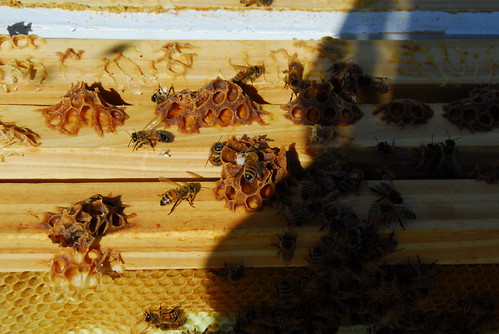
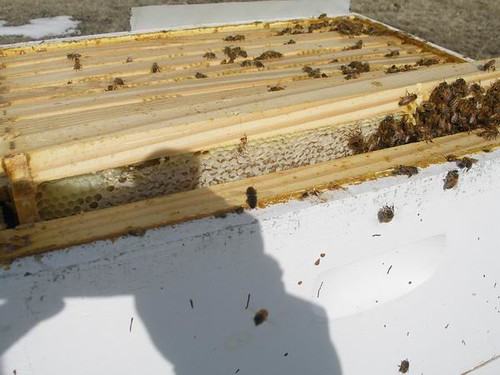
EDIT: The picture below shows some more of the (now empty) burr comb on the top of the frames. Was it drones?


The most unusual thing, was the extended comb on the bottoms of the frames. Now that the top burr comb was empty, the bottom was occupied by larvae. In this picture (below) notice we accidentally broke open some of this capped brood and can see the nearly formed bee (is it a new queen?). Can you see the eyes?


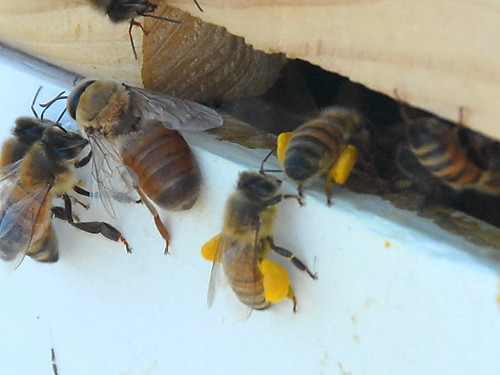
In the yard, there is an abundance of dandelions this year, perhaps from the wetter spring we've had. The bees can be seen frequenting the dandelions and the pear blossoms. Soon our crab apples will be opening, followed by the choke-cherries and lilacs.

EDIT: Here is a visitor on the dandelions:

Monday, March 26, 2007

Pollen & The Queen (Mar 25th Inspection)

Spring is in the air as well as the bees. What a great time of year especially after the long, snowy winter that has lingered over Colorado this year. As you can see by my husband's great photos, we have been to the hive several times. The first time was to see how much food the bees had consumed and whether we needed to fatten them up, so to speak. The other couple of times we were in search of the queen. This is not always as easy as it sounds since she doesn't sit on a throne or wear a crown but she is bigger and always surrounded by her loyal subjects and in our case, she has a big white dot in her back. I guess we were looking in the wrong area the other times because she remained elusive, but this time she was there, in all her glory. After the tiny, trumpet fanfare we moved on to check out the nursery. Lots of tiny bees will soon be emerging. So despite our fears of this mysterious disappearing bee syndrome and our general lack of beekeeping experience, it seems our bees will emerge to pollinate and make us some more of that wonderful honey!
Worker bees bringing home the pollen

Her Royal Majesty the Queen

Monday, March 05, 2007

March 4th & 11th Inspections

March 4th: Good news: The hive looked very strong today! However, it looked like most of their honey stores were gone, so we began the spring feeding.

EDIT: We also noticed some comb building at the bottom of the frames... Not sure if that is normal or an indication of a pending swarm?

We inspected again on March 11
th:
This time, there was quite a bit of comb up top too. The shot below shows more of this comb on the top. It looks like some had larvae.
We also cleaned out the bottom board. Here is what the gunk collected over the winter looked like.

Monday, February 05, 2007

The Bees Have Survived!


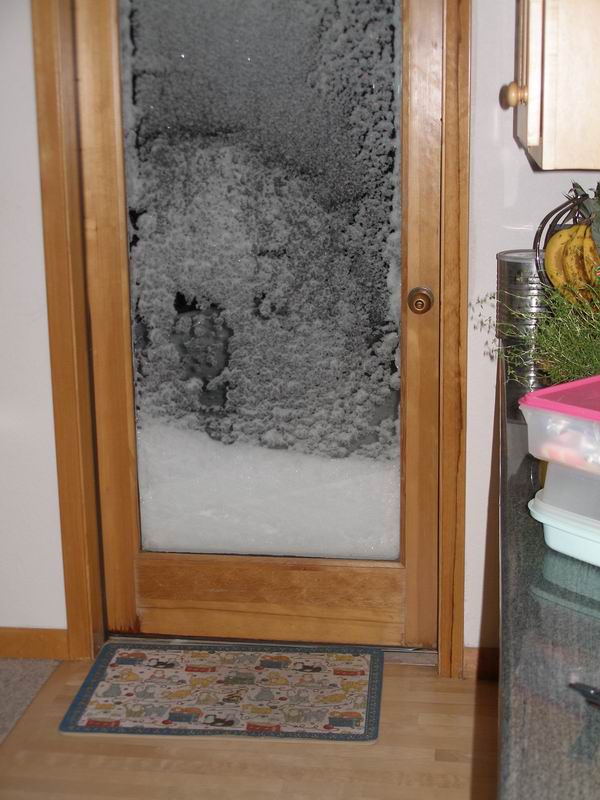
After the worst six weeks of winter I've ever seen in Colorado, the bees came out for some air today when the sun was shining and the temps reached up to the lower 40s (F). Until today, we hadn't seen any sign of them in over a month.

January was a record-cold month and we had snow-storms every week since before Christmas. How bad was it? Dave the weatherman reports:
  • The Average Temp for January was 18.7 F, that's more than 20 degrees colder than normal.
  • We had 13 days with below-zero temperatures. The coldest average low for January is normally +11 F.
  • The coldest January temp was -11.9 F, on Jan 15th. The record cold for that day is -12 F.
  • The coldest February temp was -22.4 F on Feb 2nd, breaking the old record by more than 10 degrees!
  • Our coldest wind-chill reading was -35.2 F also on Feb 2nd.
  • We've had 65.6" of snowfall so far this season.
The simple fact that the bees survived January is cause for celebration! Let's hope the worst is past us now.

Saturday, December 30, 2006

Red Snow, Blue Snow?

Red Snow, Blue Snow?
Well, think about the recent elections for a moment. Now we just had about 3 feet of snow in the past two storms and I've noticed a sort of Red/Blue divide in the reaction. We live in the country and have some 400 feet of driveway. All of our neighbors are in a similar situation - there are no "cul de sacs" around here. When the snow storms hit, there was a drive to demonstrate self-sufficiency. People cleared their own drives, dug out the best they could and helped their neighbors dig out too. People expect and prepare for every situation.

So when we watched some TV news coverage of the storm from Denver recently it seemed to be a quite different reaction. There was a lot of complaining, moaning and blame going around. "Why hasn't CDOT cleared my cul-de-sac?" "Where are those road crews anyway?" There seemed to be a sense of: Poor pitiful me, why hasn't the government stepped in to help me out?

So sometimes it takes a crisis like this to bring out the world-view of people
. Some believe they should take care of themselves and be prepared, while others seem to think everything should be the responsibility of someone else.

Friday, December 29, 2006

December Blizzard v2.0


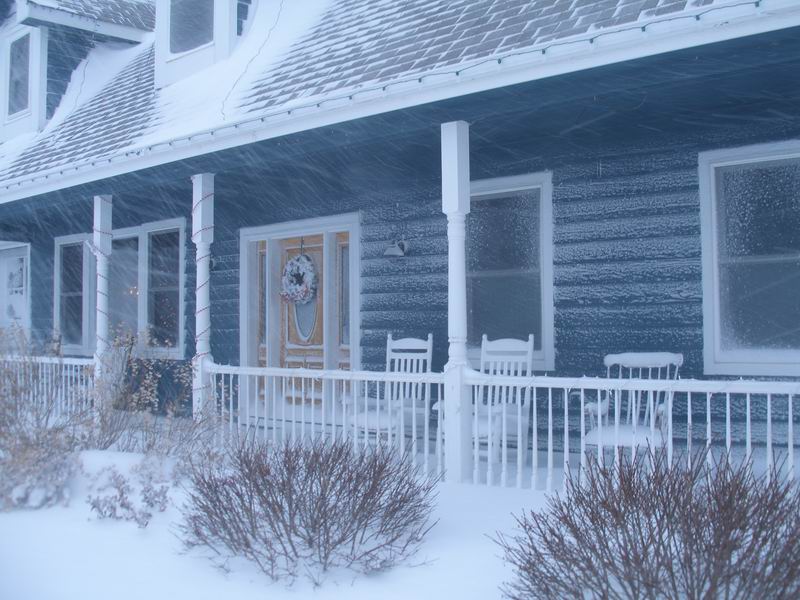
Posted 3PM December 29th: Just like the original but with new features. This is the second major blizzard in a week. This time we got a new feature with the blizzard - a power blackout. This new blizzard hit last evening and by 10 PM we had about 8 new inches on top of the old snow from before Christmas. About 9PM last night, the power went out suddenly and without a flicker. We could tell it was going to be out for a while. We scrambled to locate flashlights and candles and thought we were set for the evening.

But then I remembered that while we did fuel the car & truck before the snow started, I had neglected to get some extra fuel for the generator or for the John Deere. I got the tractor out and started plowing a path to the road and by 10 PM, was ready to go out looking for gas. Kenny and I took the SUV and drove about 6 miles south and passed by a half-dozen gas stations - all closed and all without power. We turned west toward Louisville and went a few more miles and saw no power anywhere except for a few emergency generators. By then the blizzard was ragging and the winds were blowing the snow at 30 MPH. We turned around and returned safely home empty handed. We got a few extra blankets out and decided to leave the generator off for the night (no heat).

Sometime during the night the snow stopped and the power was restored. In the morning I finished plowing the drive and went out again with Kenny for fuel (just in case). The weathermen were saying that the situation would get worse later this evening when the second wave would hit. At the first station, we found power, but the pumps were closed - no fuel! We continued on a few more miles down the road and found another station pumping the precious unleaded. We returned with a fresh five gallons of the stuff and felt ready for the next wave.
Get up to the minute weather data for our storms at this link: http://www.leyner.org/

Here is what the National Weather Service said today:

Urgent - Winter Weather Message National Weather Service Denver Co 1125 AM MST Fri Dec 29 2006 ...Heavy snow to continue today for most areas of northeast and north central Colorado... .bands of moderate to heavy snow will continue to affect the northeast plains of Colorado through this afternoon. West of interstate 25...only light snow is expected through the day. Stronger winds over the northeast plains will also cause near zero visibilities in blowing and drifting snow. North winds from 15 to 30 mph can be expected with some gusts up to 35 mph. The storm is currently centered over southwestern New Mexico and is expected to move slowly northeastward into the Texas panhandle by Sunday morning. This track will produce strong winds and heavy snowfall for the northeastern border counties of Colorado now through much of Sunday. This storm track could also produce heavy snowfall for the rest of the plains of northeast Colorado, the front range foothills and higher mountains east of the divide for much of the weekend. This includes the Denver metro area and all the urban corridor. There are still uncertainties regarding the duration of the heavy snow west of interstate 25 and whether heavy snow will redevelop near the mountains this weekend. Because of this a winter storm watch continues through Saturday night for the north central mountains and front range foothills and the plains through Sunday afternoon. All people planning to travel across northeastern and north central Colorado today through the weekend should be prepared for road closures and very difficult winter driving conditions. Roads will be icy and snow packed and blowing and drifting snow will become more of a problem on the plains with time. You are urged to avoid any unnecessary travel and carry items such as a shovel, food, water and warm clothing if you do go out. The storm has also disrupted air travel at Denver International Airport. Air travelers should check with their airlines for delayed or canceled flights.

Northwest Weld County- Boulder And Jefferson Counties below 6000 feet/West Broomfield County- including...Fort Collins... Hereford... Loveland... Nunn... Arvada... Boulder...Golden...Lakewood...Longmont 1125 AM MST Fri Dec 29 2006: Winter storm warning is cancelled… Snow and blowing snow advisory in effect until 6 am MST Saturday. Winter storm watch now in effect from Saturday morning through Sunday afternoon. The national weather service in Denver has issued a snow and blowing snow advisory, which is in effect until 6 am mst Saturday. The winter storm warning has been cancelled. The winter storm watch is in effect from Saturday morning through Sunday afternoon. The bands of heavier snow showers are expected to remain east and south of Denver. Therefore the winter storm warning has been downgraded to a snow and blowing snow advisory. Additional accumulations of 2 to 6 inches are still possible through tonight. The potential still exists additional heavy snowfall and strong winds Saturday through Sunday as the storm continues to move slowly northeastward. Additional snowfall accumulations of 6 to 12 inches will be possible over the weekend along with areas of blowing and drifting snow. A snow and blowing snow advisory means that visibilities will be limited due to a combination of falling and blowing snow. Use caution when traveling, especially in open areas. A winter storm watch means there is a potential for a hazardous winter weather event in and close to the watch area. Significant snow accumulations may occur that could impact travel. Stay tuned to the national weather service or your local news media for the latest updates and possible warning concerning this potential winter storm.

Blizzard Update: Dec 21, 2006


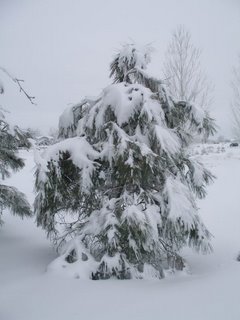
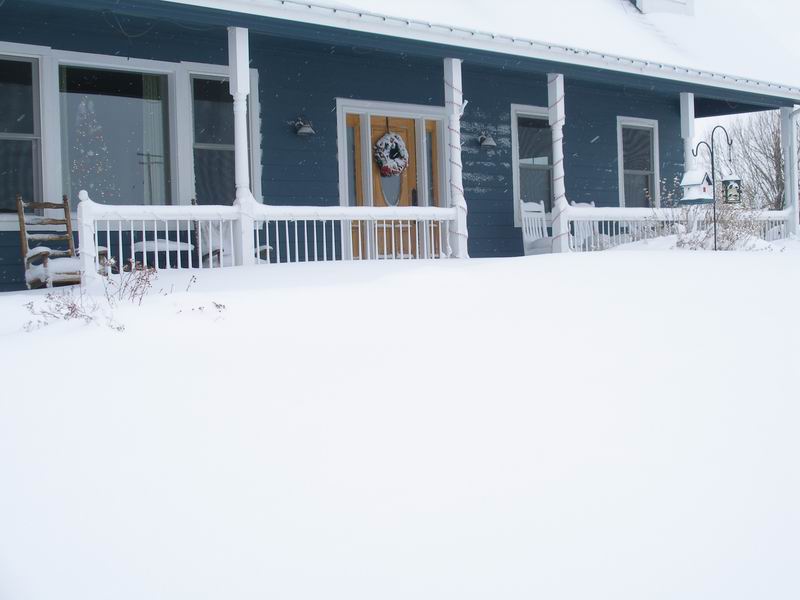
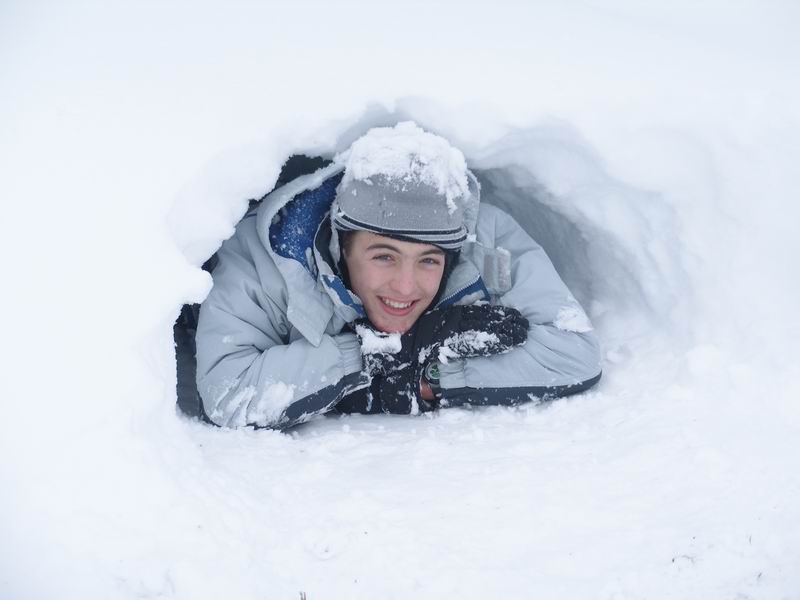
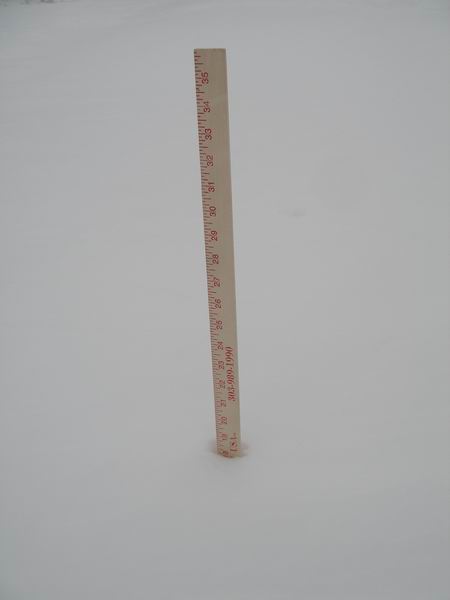
Update: 10AM, December 21st: We are officially "snowed-in". After about an hour attempting to clear the driveway, I gave up on the John Deere. The snow was so far over the top of the snow blade, it was not able to go straight down the driveway. See the pictures below. The boys are having a great time digging forts in the snow. We've got fresh bread in the oven and plenty of hot cocoa to keep us warm. My official report was 25.5" for the 24 hour period ending at 7AM this morning (see map), but as you can see from the new yardstick photo, it is showing 28" now. (Be patient while the pictures download. The snow drifts may be impacting our broadband connection.)

Blizzard Report: Dec 20, 2006

Posted: 10PM December 20th: This has been the biggest blizzard we have had since we lived in Colorado for the past 7 years and it's not over yet. We measured from 14 to 20 inches of snow in most places of the yard. With the winds some of the drifts were over 4 feet deep by sunset.

Here is the weather service warning for that night:

URGENT - Winter Weather Message
National Weather Service Denver Co 359 pm MST Wed Dec 20 2006
...Strong winter storms to continue over northeast and north central Colorado tonight into Thursday morning .a major winter storm will continue bringing widespread moderate to heavy snow and blizzard conditions to northeast and north central Colorado this tonight into Thursday morning. The storm producing this weather is centered over the extreme southeast corner of Colorado. It is expected to move little through Thursday morning.


At 4 pm MST...snowfall amounts over the plains range from about 6 to 11 inches so far with the storm. The urban corridor has seen about 9 to 14 inches so far. The foothill and Palmer Ridge...including the southern and southwestern great Denver area have had 14 to 21 inches thus far. The higher mountains east of the divide have had 12 to 22 inches so far. Wind gusts of 30 to 40 mph are widespread across the plains with snow drifts up to 6 feet. Travel has become impossible this afternoon across most of northeast and north central Colorado. Travel is not recommended through Thursday morning.

Boulder and Jefferson counties below 6000 feet: 359 pm MST wed Dec 20 2006: A blizzard warning remains in effect until 12 pm MST Thursday. Snow heavy at times will continue into Thursday morning. Total accumulations of 12 to 24 inches are expected in most locations by Thursday morning. As much as 30 inches of snow will fall in the southern and southwestern metro Denver suburbs and the Palmer Divide area. North winds of 20 to 35 mph will produce blizzard conditions. Travel is not recommended through Thursday morning.

Friday, November 24, 2006

Harvest Update


We pulled the last of the season's carrots this past week. The carrots kept going all the way to Thanksgiving this year! The total harvest for carrots this year was 74 lbs.

The first carrots were planted April 1st, then more about every 2-3 weeks later through June. With the staggered planting we had a nearly continuous harvest of carrots for 22 weeks, with an average of 3.36 lbs per week. We planted nothing but organic Scarlet Nantes this year. They are very sweet, tender and very well suited for this climate.

Monday, October 30, 2006

A Taste of Winter


Sunday, October 15, 2006

Prepping the bees for winter

We did some of the final preparations of the bee hive for winter this week. Our recent inspection showed so much stored honey and nectar that we decided a fall feeding was unnecessary. After the bees filled all available space in the deep frames with honey, they must have got busy building burr comb in nearly every crack and crevice and filling them up. When we pulled the frames to inspect the upper deep, we cracked some of this burr comb and the honey leaked out below. The picture below shows the view down inside the upper deep box, with some of the spilled honey. The capped honey can be seen on the outside frame. Some of the burr comb also remains between adjacent frames.

So with plenty to eat, we needed to focus on treating for the mites. Still being new to this, we chose to go with a natural product and stayed away from the chemical fumigation processes. We chose to go with Apiguard, but some shipping problems delayed our installation until the weather cooled off last week. We began the treatment on October 10th.

We also added some top ventilation to the hive in the form of a homemade 1”x 2” spacer that sits directly above the upper deep box, just below the inner cover. I notched a portion of it to match the middle opening of a standard entrance reducer. This opening sits at the top of the hive, increasing ventilation and air-space above the hive, and makes room for the Apiguard tray. The bees can also learn to use this as a secondary entrance while it is installed.

Finally we installed the mouse-guard entrance reducer. This is a metal cover for the main hive opening that is tacked in place and has small holes for the bees to enter & exit. It helps them defend the hive against raiding bees and keeps the mice out. The upper spacer and the mouse-guard can be seen in the photo below:
Sunday, October 01, 2006

2006 Harvest Summary

As of Oct 1st, most of the 2006 harvest is over. We had a very early freeze this year, which hit us on September 17th. This ended the production more than a month earlier than in recent years. We've also had a severe draught this year, with only 4 inches of rainfall between April 1st and September 30th. The spring was very, very dry with only 1 inch of rain for the critical period between April 1 and June 30. We kept the irrigation going in the garden this year at normal levels, but it doesn't seem to satisfy in the same way as natural rain. We cut the watering of the lawn areas way back to barely maintain life in the lawn and the trees.

One notable difference this year was the addition of the bees. They arrived too late for the spring fruit blossoms and perhaps as a result, or maybe from the draught we had virtually no fruit harvest this year. No apples, no cherries, no blueberries, no strawberries, but our vegetables did well overall with a total production of 801 lbs.
  • This year our overall champion for single plant production goes to Colin's pumpkin which produced 112 lbs.
  • We set new records this year for production of carrots, cucumbers, garlic, tomatoes, peppers and rhubarb
  • And we harvested our first honey!

This year's harvest totals compared to last year:

  • Cabbage: 11.2 lbs (new)
  • Cantaloupe 10.3 lbs (new)
  • Carrots: 74 lbs (up 89%) [updated 11/27/06]
  • Cucumber: 83 lbs (up more than 2x previous record)
  • Garlic: 4.2 lbs (up 24%)
  • Green Beans: 15.4 lbs (up 57%)
  • Honey: 48.5 lbs (new)
  • Mixed Salad Greens: 5.8 lbs (down 49%)
  • Onions: 23.4 lbs (up 23%)
  • Peppers: 54.4 lbs (up 11%)
  • Pumpkins: 121 lbs (down 25%)
  • Rhubarb: 23.3 lbs (up more than 2x previous record)
  • All Squash: 83.3 lbs (down 48%)
  • Tomatoes: 175.7 lbs (up more than 100 lbs!)

Monday, September 25, 2006

September Hive Inspection

We attempted to do an inspection of the hive today. This was to be the first full inspection since we put the supers on and removed the honey. There was some good news and some bad news.

The hive presently has two deeps and we removed the honey supers 2 weeks ago.

First the hive seemed very strong, even on a hot, calm day when many of the bees were out foraging, the hive was very crowded. We also found pollen stores, brood, larva and even spotted the queen in the post-inspection review of the photos. (She's in the photo above.)

The bad news, after combing more than a dozen close-up pictures later, we did spot one bee, tending the larva with varroa mites on her back (center in the photo below). This means we must start treating for the mites.
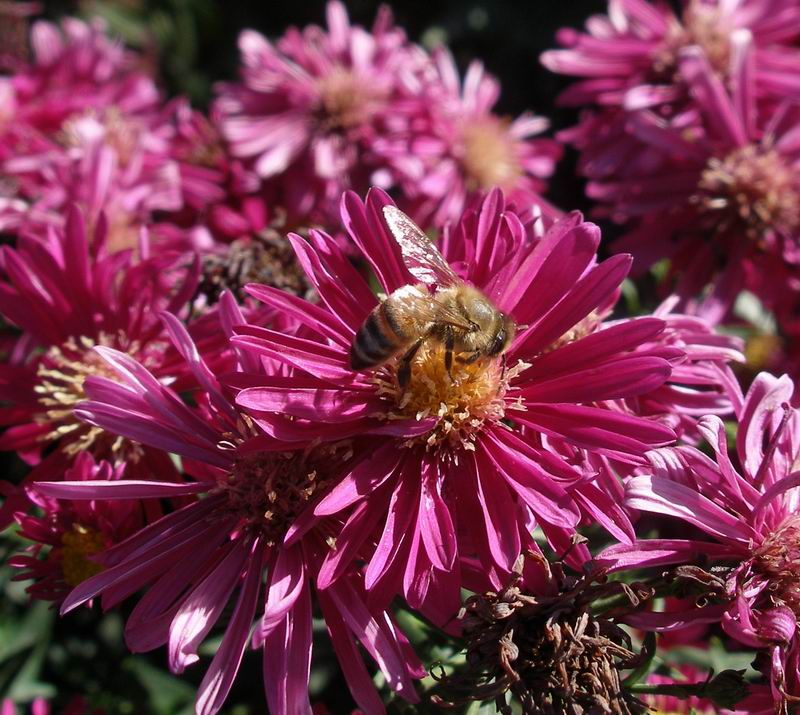
Even after our first freeze and several frosty mornings, we still have many warm days and many flowers still quite active in our garden. On warm days we see many bees on the late blooms including: aster, butterfly bush, spirea, russian sage, salvia, stonecrop and other hearty perenials. The photo below shows one of the workers on an aster, taken yesterday.

Monday, September 18, 2006

Apple Blossoms?


Here it is later summer, after the first freezing temps of the season and I'm out looking over the impact in the garden and what do I see? Apple blossoms in full bloom! This tree is confused.

Sunday, September 17, 2006

First Frost: Sept 17, 2006

We had our first major wind-storm of the season yesterday, with gusts topping out at 45 MPH and steady winds of 35 MPH for several hours. This of course wrecked havoc on the garden. One of the bean towers was toppled, many of the tomato and pepper plants had torn limbs or were otherwise tossed about by the high winds.

This was followed by clear skies and calm winds overnight, which allowed the temps to dive to an "official" low of
34.4º F which is measured at 5' above the ground. However I recently installed an additional sensor at ground level to detect frost, which recorded a reading of 31º F. This sub-freezing temp was confirmed by the fact that this morning all the leaves of the squash, pumpkins, cucumbers and a few tender annual flowers were frost-bitten and dead.

Saturday, September 09, 2006

2nd Honey Harvest

We harvested the second honey super today and tried the escape board this time. While it seemed to be no more effective than the BeeQuick on the fume-board, we varied the process slightly which seemed to help. This time we loaded the super on the trailer, quickly covered it with a towel and I jumped on the tractor and high-tailed it out of there.

After moving a safe distance from the hive, we removed each frame and bumped and brushed all the remaining bees away. Since we were far enough from the hive, the swarming was not quite as bad. Once again we avoided any bee stings.

We also let the frames warm-up a few hours before we started the harvest, which also made the process go much more quickly. After we measured the last bottle we had a total of 21.5 lbs from this super. Not as much as the first one, but more than we expected.

This brought our first-year hive total to 48.5 lbs of honey. From everything we've read and heard, this is a very impressive yield for a first year hive. The hive seems very strong right now and again no signs of any pests at this point. We will do a full inspection in a few weeks and see what we find.

Saturday, August 26, 2006

Honey Harvest

One super-frame filled with capped honey.


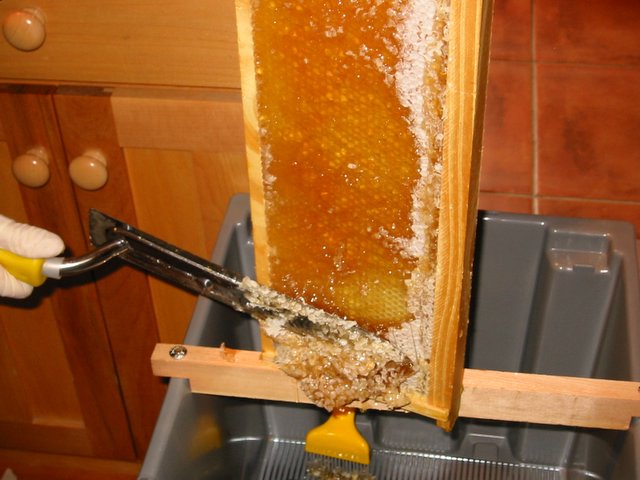
The uncapping process


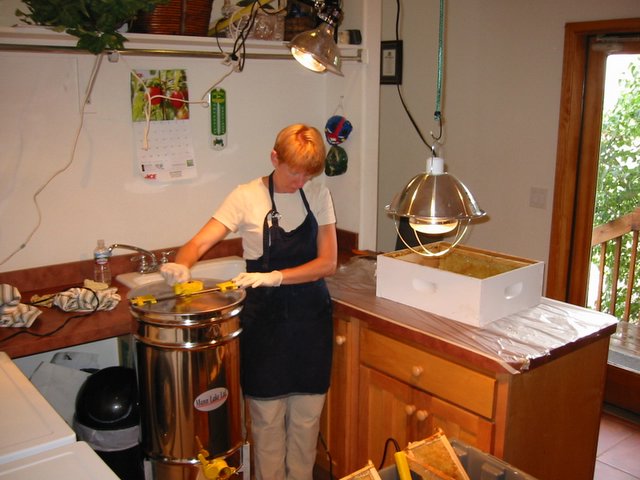
The extraction process


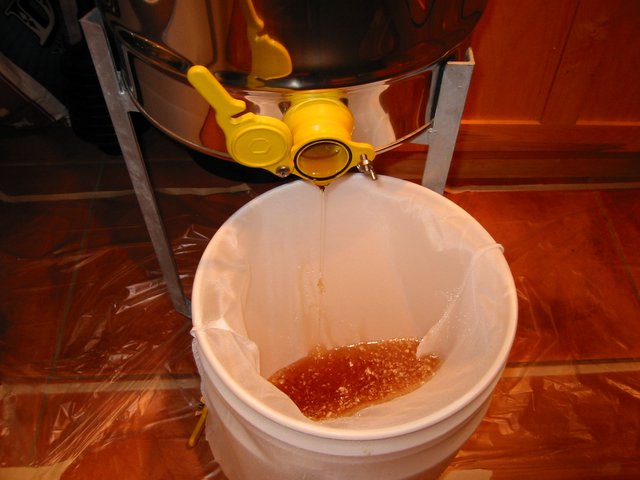
Some of the first honey oozing from the extractor

Posted by Picasa


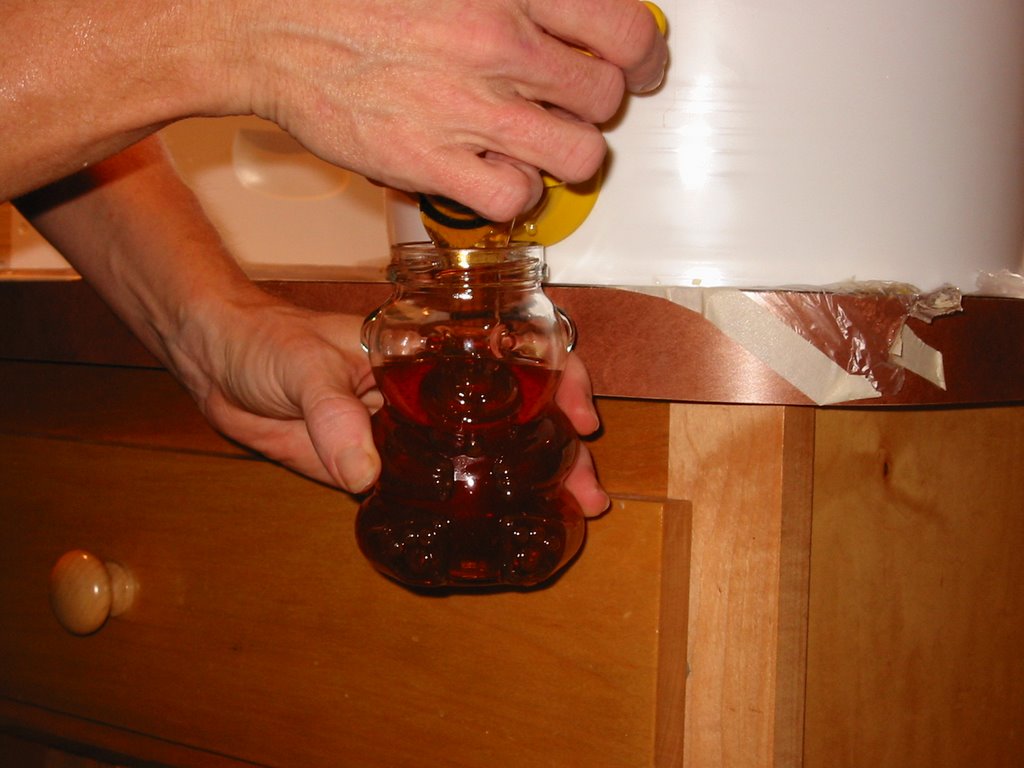
Filling the first honey-bear.


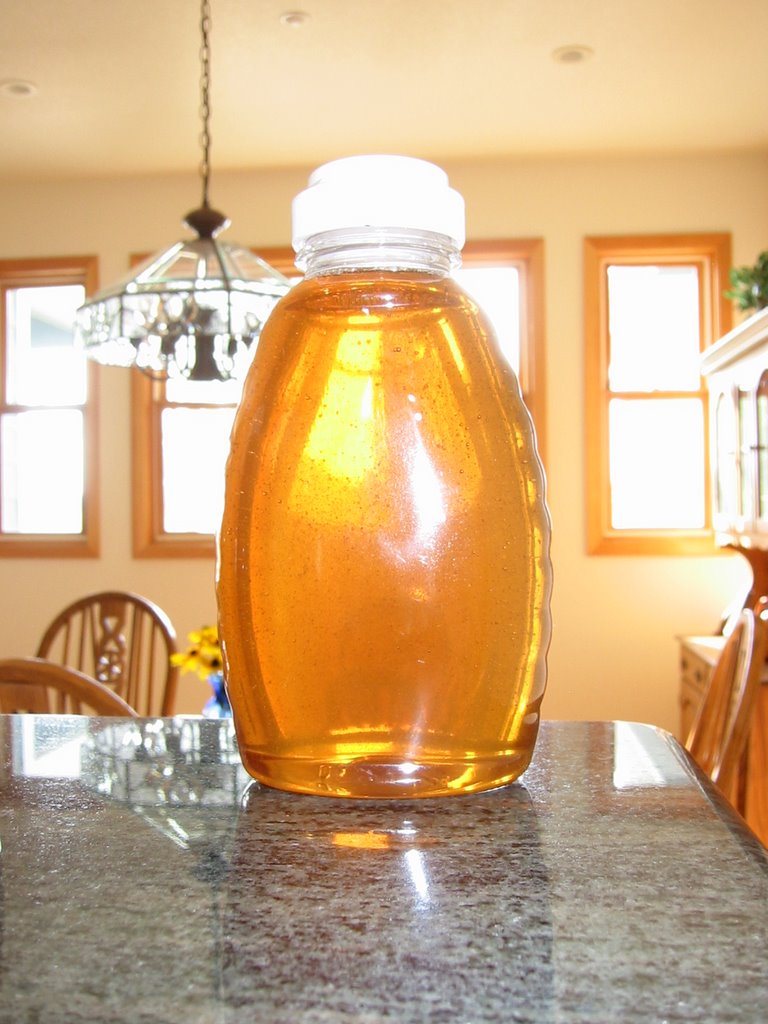
One pound of our first honey crop.


A sample of the 27 lbs of honey we harvested today. We left one on the hive that was not yet capped off, so we'll check on it in a couple of weeks.